
Tree roots don’t break into sound pipe. They find an opening that’s already there, a cracked fitting, a joint that’s moved, or a penetration someone cut and never sealed properly. The drain is warm and damp, so once a fine root finds that gap it keeps going and thickens up inside the line.
I went to a house in Palm Beach in October for a blocked sewer. One blockage, as far as the owner knew. Roots were getting into that line in three separate places, and each one had a different cause.
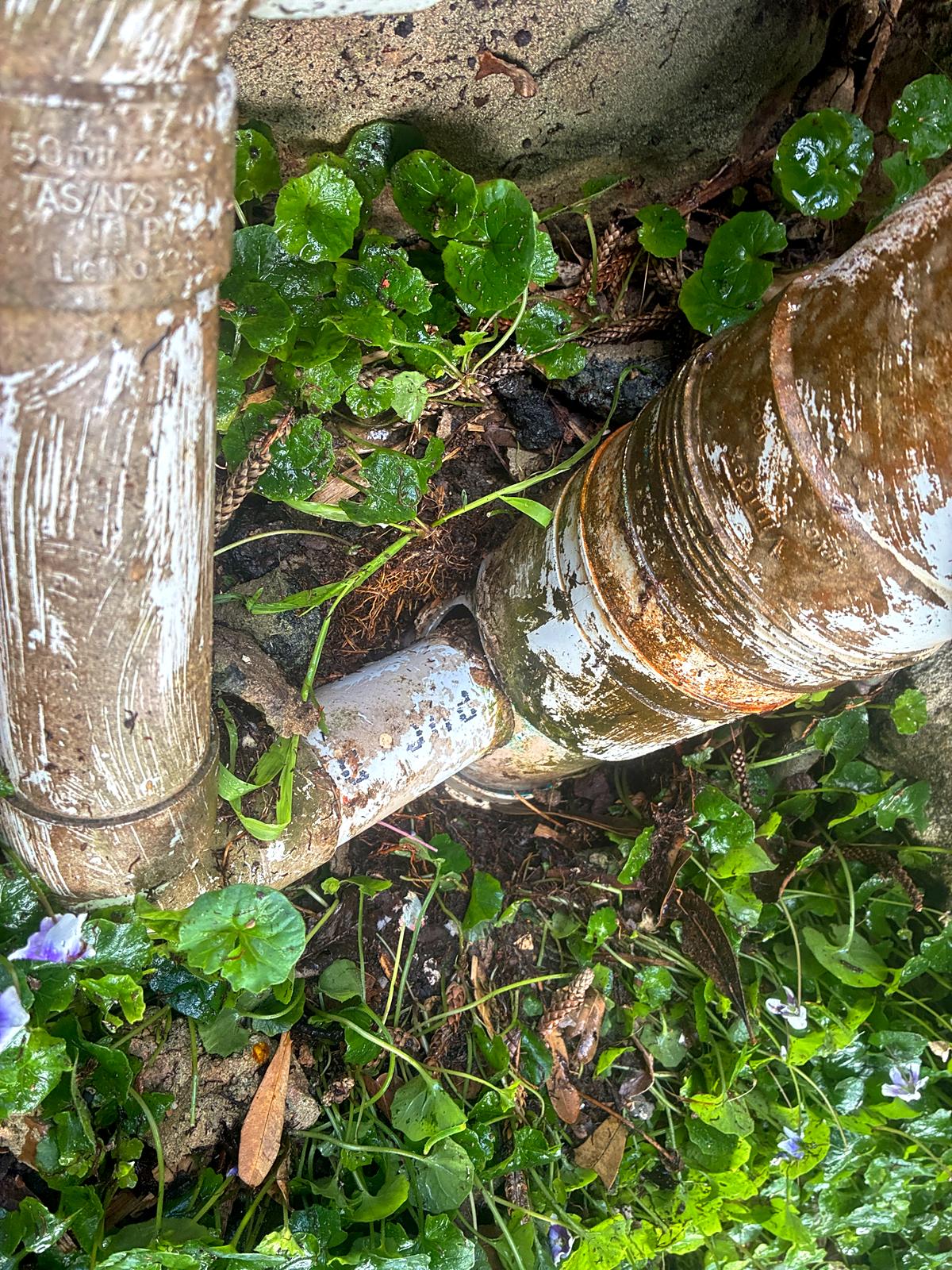
About a metre and a half downstream of the sewer shaft. A section of pipe had dislodged and roots had grown straight through the broken fitting. Once that was cleared I could get the full diameter of the pipe back.
At the junction on the sewer shaft. The inlet had roots coming through a break in the junction itself.
Where the laundry tub ties in, on the southern side of the house. Someone had cut a hole in the side of the sewer drain to make that connection and never sealed around it properly. Roots had found the gap. I cut them away and cleared the ground outside the pipe to slow them coming back.
That’s three entry points in one drain. The owner had been told before that it was tree roots, which was true. Nobody had said how many places they were getting in, or why.
Through an opening that already exists, so the question worth asking is how the opening got there.
Roots follow moisture. A sewer losing a small amount of water into the soil around it is the most reliable water source in a dry garden, which is why they find it and why they keep heading back to the same place. So the roots are the symptom, and the opening is what actually needs fixing.
Clearing with a cutting head restores flow, often completely, and it’s the right first move. You can’t diagnose a drain you can’t get through, and the house has to work tonight.
What it doesn’t do is close the opening, so the roots come back. How long that takes depends on the size of the gap, the tree and the season. Some lines run for years, some are back within months.
If a drain gets cleared and you’re told it’s sorted, ask what was found and where. Clearing a drain and diagnosing one aren’t the same job.
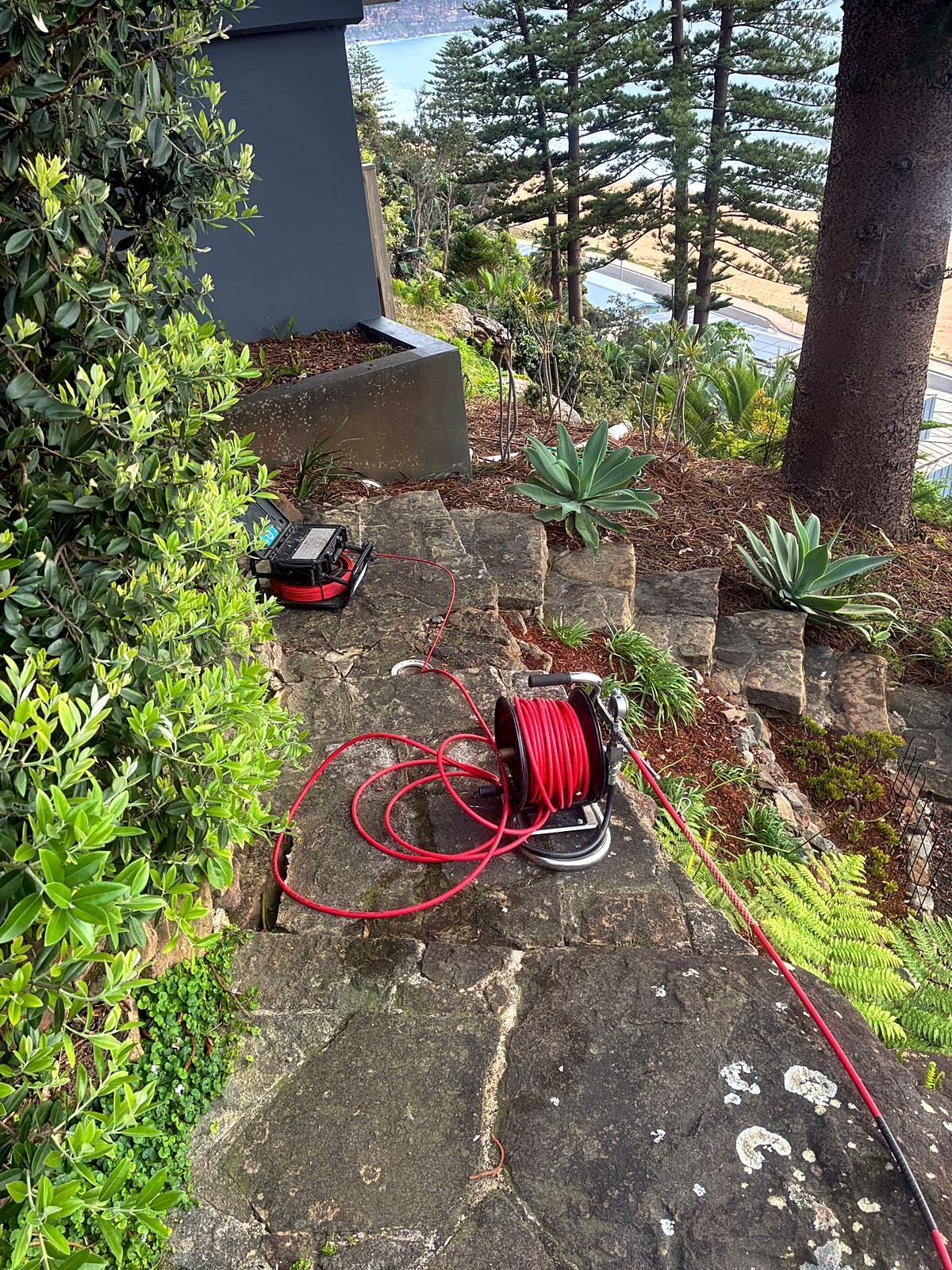
A camera down the line, with the position marked on the surface. That tells you how many entry points there are, whether the pipe is broken or the joint has simply moved, and whether digging is needed at all. Without it you’re guessing where to dig, which is the expensive way to do this.
None of these mean the drain fails this week. They mean it’s time to look while you still get to choose when.
The drainage on your property is generally yours, up to the connection point, and the water authority looks after its mains. Where that boundary falls varies with the property and the system, so confirm it before anyone starts work rather than after.
If the tree is next door, responsibility usually turns on where the damage is rather than where the trunk is, and the pipe on your land is still your pipe. Councils also have their own rules about removing or pruning trees, including trees on private land, so a tree that’s wrecking a drain isn’t automatically a tree you’re allowed to take out.
That’s a plumber’s summary, not legal advice. If there’s money or a neighbour involved, get it checked properly.
The species and the distance from the line are what decide whether a tree becomes a drainage problem.
Species with aggressive surface roots cause most of the trouble, and your council’s tree guidance will list the ones to avoid near services. The part people skip is simpler: know where your drainage actually runs before you plant. A sewer line is usually the last thing anyone thinks about when picking a spot for a tree.
Honestly, you reduce it rather than stop it.
Closing the opening is the only thing that works long term, whether that’s a repair to one section, a reline or a new length of pipe. Everything else buys time. Cutting roots back on a schedule keeps the line running and the root treatments sold for this can slow regrowth, but neither one seals the gap the roots are coming through.
If the line is going to be cleared on a schedule, the useful question is how often, and the camera answers that better than a guess.
No.
If the line is in reasonable condition and there’s one small entry point, periodic clearing can be a sensible plan. Over several years it’s cheaper than a dig, and for a house being sold or renovated soon it can be the right call.
Repair makes sense when the pipe is broken rather than just open, when there are several entry points, or when the blockages are getting closer together. That last one is the signal most people notice first.
It depends on the length of the line, the access, how many entry points there are and what the camera shows. I quote after looking, not before, because the difference between one cleared joint and a broken section under a driveway is thousands of dollars.
If you want a sense of the range for a straightforward blockage first, there’s a separate piece on what a blocked drain costs in Sydney, and a general one on blocked drains on the Northern Beaches.
Tell me what you’re seeing and where, on 0423 123 842, and I’ll tell you whether it needs attention now or whether it can wait.
Rarely as the first event. Roots follow moisture to an existing crack, joint or unsealed penetration, then thicken inside it and make the damage worse. The opening usually comes first.
Not always. It depends on the species, how close it is to the line and whether the pipe can be sealed. Removing a tree and leaving a broken pipe still leaves you with a broken pipe.
Nothing you pour down a drain dissolves what’s already in there. The root treatments sold for this, usually foaming products, are made to kill root growth inside the pipe and they can slow regrowth. They won’t clear a blocked line, they won’t repair the opening the roots came through, and what you’re allowed to put into a sewer is regulated, so read the label and check before using anything.
It depends on the size of the opening, the tree and the season. Some lines run for years after a clear, others are blocked again within months. The camera is what tells you which one you’ve got.
It depends on the length of the line, the access and how many entry points there are. A straightforward clear is a different job to a broken section under a driveway, which is why the camera comes first and the quote comes after.
Generally the water authority is responsible for its mains and you’re responsible for your own drainage up to the connection point. Where the boundary sits varies, so confirm it before work starts. That’s a plumber’s summary, not legal advice.
Plumbing Licence No. 346 268C
© 2026 Kelly's Plumbing & Drainage, All Rights Reserved.